The Critical Hours
Dr. Aris placed the tick in a vial and turned his full attention back to Max. “The amazing thing about Tick Paralysis is that it’s almost completely reversible,” he said, though his face remained cautious. “Once the source of the toxin is removed, the body starts clearing it out. But Max is old, and he’s been paralyzed for a long time. His system is weak. We need to stabilize him and see if his nerves can wake back up.”
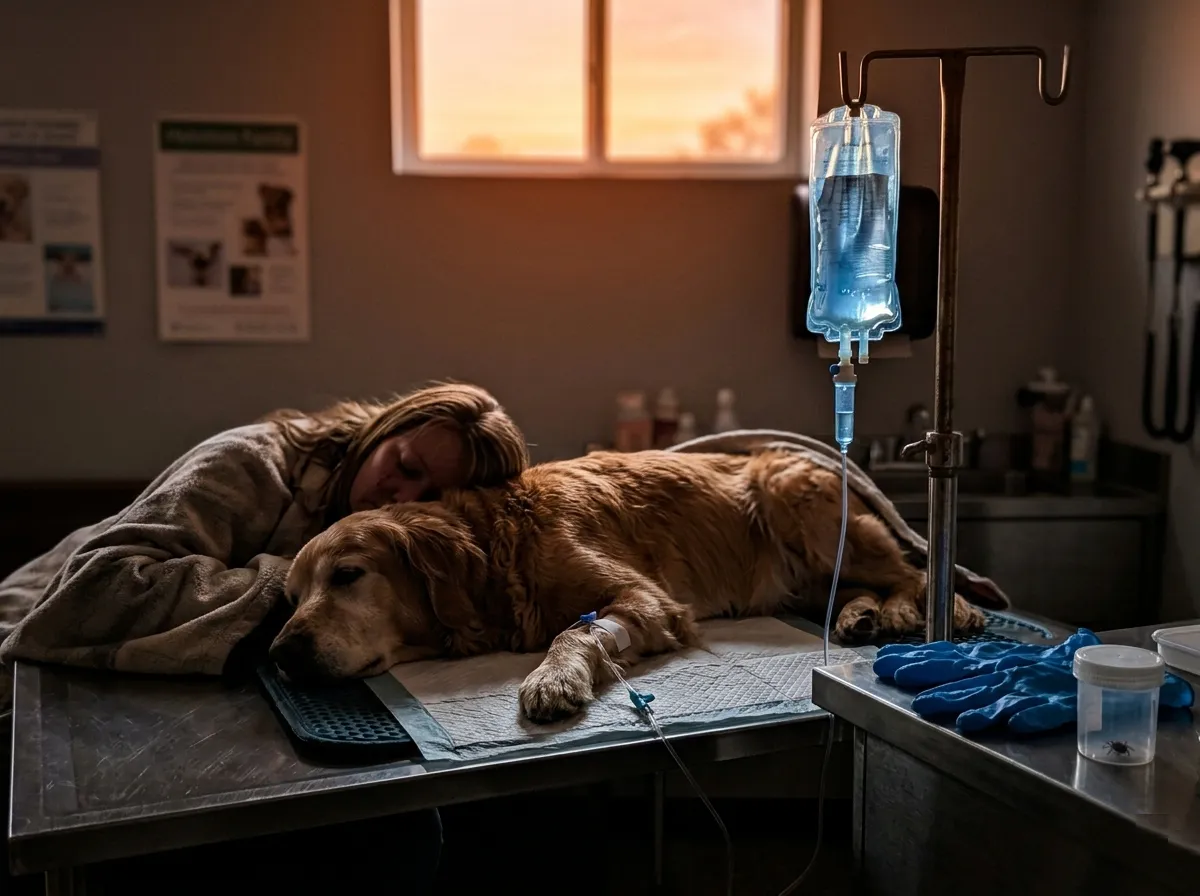
He canceled the euthanasia order and immediately started Max on IV fluids and high-dose antioxidants. The “Peace Suite” transformed from a place of death into a makeshift intensive care unit. Sarah refused to leave his side. She curled up on the rug beside him, her head on her arm, watching the slow drip of the IV bag. The vet warned her that the next few hours were critical. If the paralysis had reached his diaphragm, he might still stop breathing.
Hours passed in a blur of ticking clocks and the soft hum of the clinic’s ventilation. Outside, the sun began to set, casting long orange shadows across the room. Sarah talked to Max, telling him about the walks they would take and the steaks she would buy him if he would just open his eyes. But Max stayed limp, his breathing still shallow and rhythmic. The initial burst of hope began to sour into a new kind of pain: the pain of waiting.