The Longest Journey Home
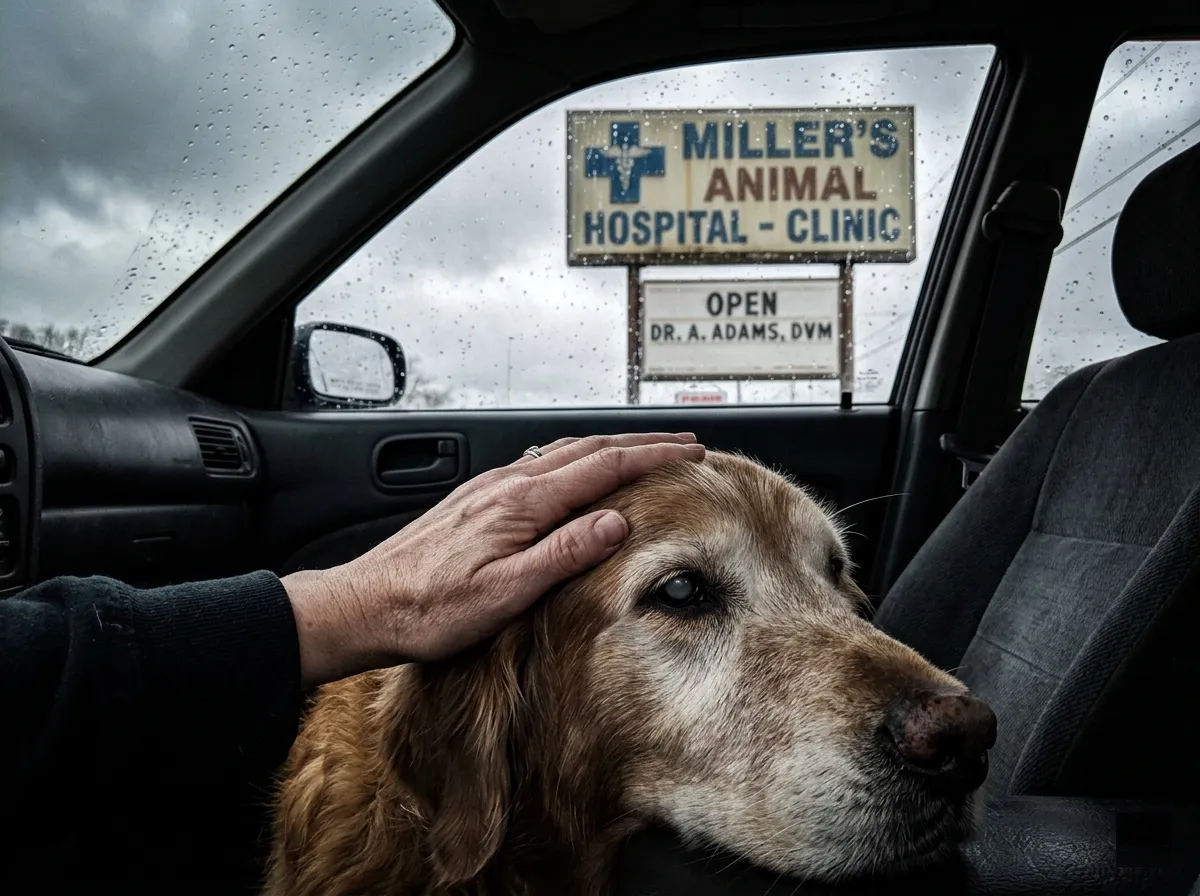
The old station wagon hummed a sad, low melody as it rolled into the gravel parking lot of the animal hospital. Max, a twelve-year-old Golden Retriever with fur like a dying sunset, rested his tired head on the center console. Each breath came hard and heavy—a rough, rattling sound that had stolen Sarah’s sleep for weeks. It was a sound that whispered of an ending she had never wanted to face. Her hand shook as she reached out to touch the soft velvet of his ears, mouthing a quiet apology for what lay ahead.
Inside, the clinic smelled of disinfectant and unspoken grief. No one in the waiting room met her eyes. They just stared at the floor while Sarah gave her name at the desk. The receptionist didn’t ask for details. She only nodded, her face full of a pity that hit Sarah like a punch to the chest. They were led to Room 4—the “Peace Suite”—a space made to look cozy but reeking of finality.
Sarah sank to the floor, pulling Max’s heavy, worn body into her lap. He gave her hand a weak, tired lick. His tail wagged once, twice, then went still against the carpet. Dr. Aris, a gentle man, knocked softly before entering with a small tray. In that instant, the weight of the decision crushed Sarah. She wasn’t just saying goodbye—she was the one opening the door for him to leave forever.
The Crucial Check
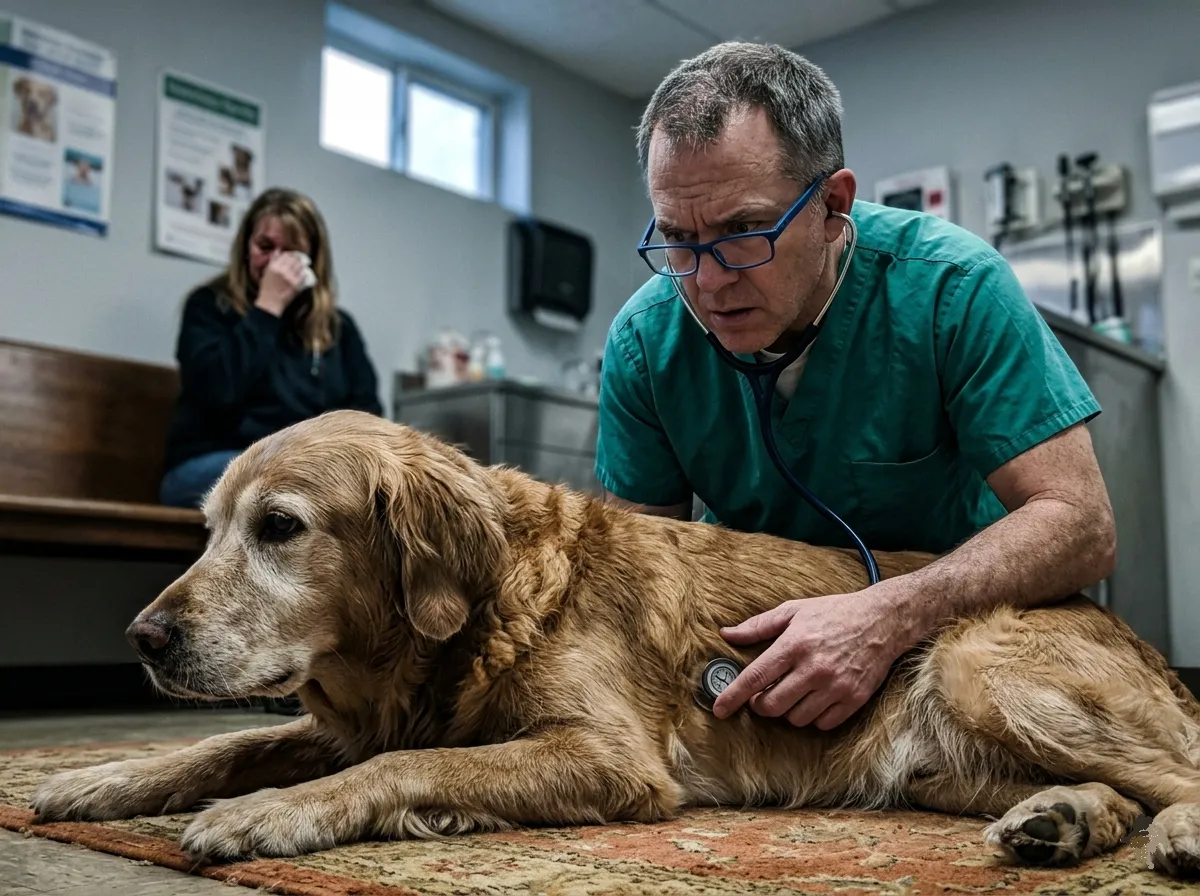
Dr. Aris knelt beside them, his movements calm and careful. He didn’t reach for the needles right away. Instead, he laid a hand on Max’s side, feeling the shallow rise and fall of his chest. He began explaining the process in a steady voice that Sarah could barely hear through her tears. He talked about peace, freedom from pain, and the “gift” of a gentle end. But looking into Max’s foggy eyes, Sarah felt nothing but betrayal.
Max had been her anchor through everything—the bitter divorce, the cross-country move, the lonely nights. He was the only steady thing in a decade of chaos. And now, watching him unable to stand, his back legs ruined by arthritis and something the vets called “neurological decline,” felt like watching a slow-motion wreck. She nodded, giving the signal for the sedative that would ease him into sleep before the final injection.
But as Dr. Aris reached for the syringe, he stopped. His brow furrowed. He pressed his stethoscope to Max’s chest, moving it slowly across his ribs. Sarah’s heart pounded. Was it already over? Had his heart stopped on its own? The room fell into a thick silence, broken only by the clock on the wall. Then Dr. Aris looked up, and his face held something strange—not sadness, but sharp, focused confusion.