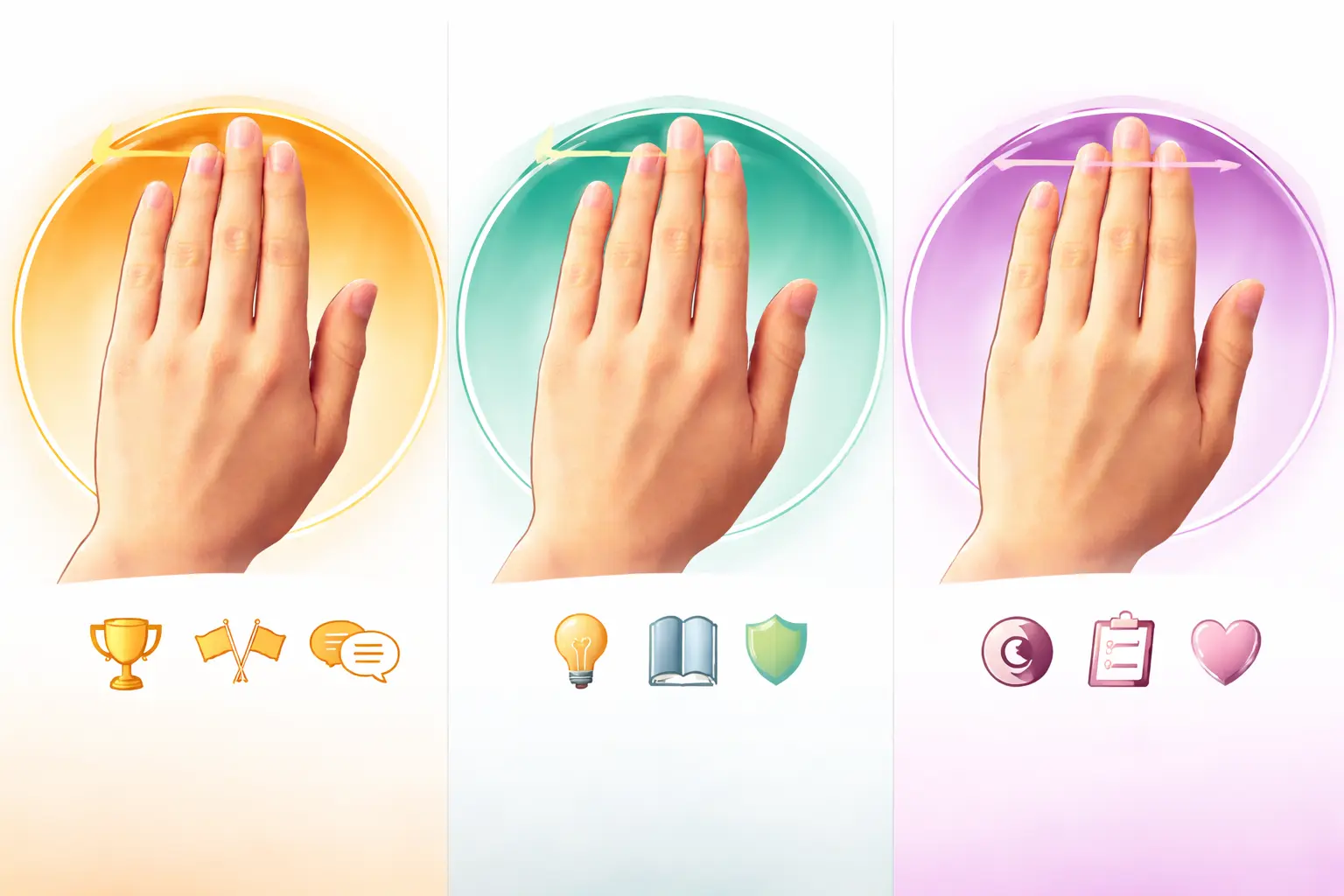
Take a moment to look at your hand. Compare your index finger and your ring finger — the two that sit side by side. Which one appears longer? You don’t need a ruler. Just place them next to each other. For many people, there’s a subtle yet clear difference. Either the ring finger is slightly longer, the index finger extends a bit more, or they match almost perfectly. It’s a small detail most of us overlook.
But once you’ve noticed it, you’ll find it’s surprisingly steady across people. And that’s what makes it fascinating. This isn’t just a casual observation people made for amusement. The length relationship between these two digits has actually been researched and given a formal name. Scientists call it the 2D:4D ratio — the proportion between the second digit (index finger) and the fourth digit (ring finger).
It’s a minor physical feature. Yet some researchers believe it may reveal deeper biological patterns.
The 2D:4D ratio is believed to be shaped by prenatal hormone exposure — especially testosterone and estrogen. These hormones influence how various parts of the body form during early development, including the relative lengths of specific fingers. That’s why the ratio differs from person to person.