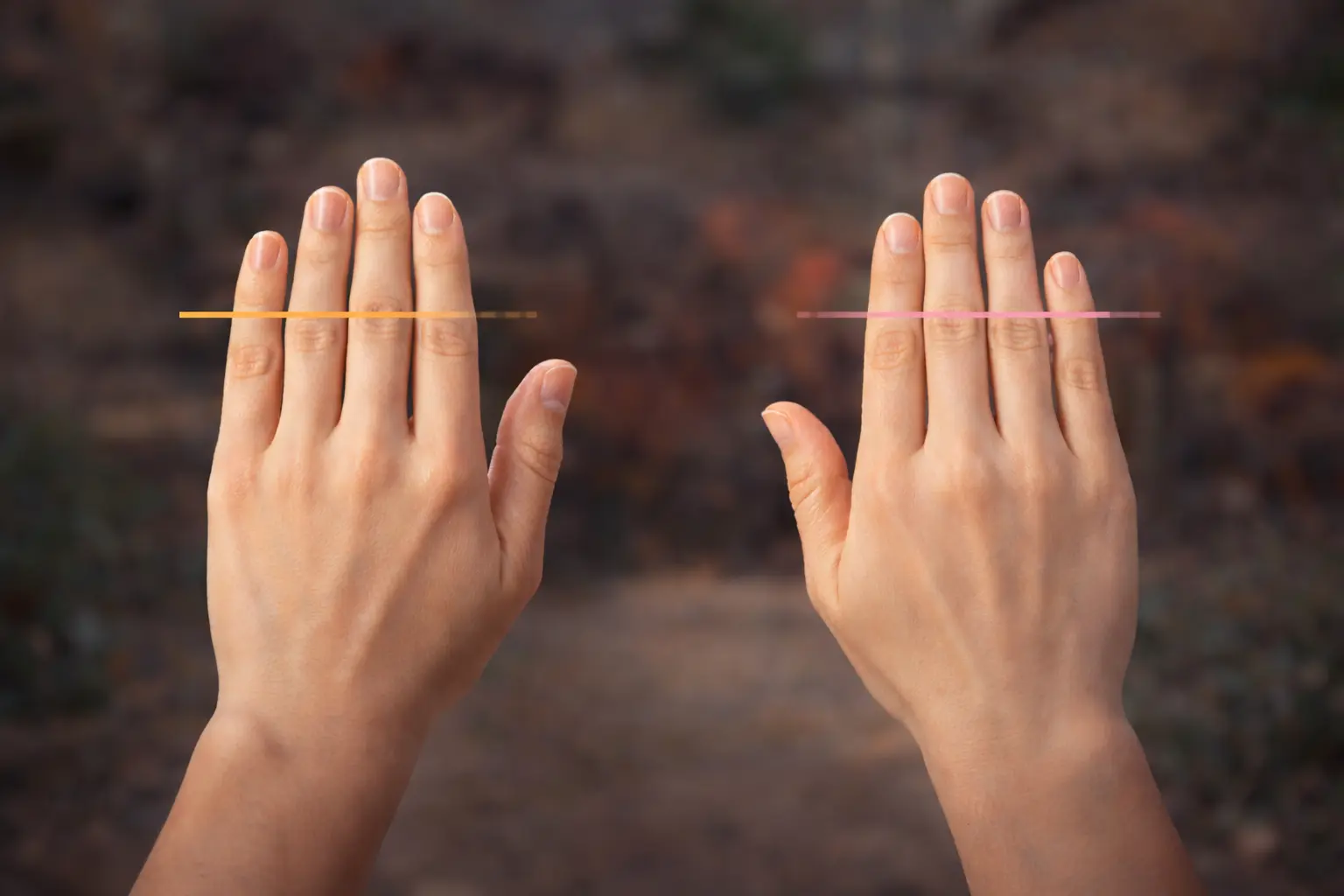
Generally speaking, a longer ring finger tends to indicate higher testosterone exposure in the womb, while a longer index finger suggests lower levels. Since this is determined early on, the ratio typically stays consistent throughout life. Over time, scientists have started exploring whether this physical trait might be linked to certain behavioral tendencies or personality traits. Some studies have investigated connections between finger length ratios and characteristics like risk-taking, assertiveness, and social behavior.
That’s where public interest began to grow. It’s not just about how your fingers look — but what that small difference might reveal beneath the surface. So now that you’ve compared your own fingers… here’s how the three common patterns are often described: