Why Your Go-To Fixes May Not Be Enough
Chewing parsley or sipping green tea? You’re on the right track, but you might only be addressing the surface. These chlorophyll-rich herbs act as natural deodorizers, and a mint leaf can definitely give you a quick burst of freshness. However, they often fail to tackle the real root of the problem: the stubborn bacterial biofilm coating the back of your tongue. That’s where most odor-causing gases are produced, and a simple leaf just can’t penetrate deep enough.
What about citrus fruits? Some people rely on lemons or oranges, thinking the high acidity kills germs. Dentists warn that while citric acid does stimulate saliva flow (great for rinsing), overusing it can erode your tooth enamel. You might get fresher breath for an hour, but you could be damaging your teeth for life. The goal is to find a solution that balances oral pH without harming your enamel.
So we’re looking for a “Goldilocks” remedy—powerful enough to neutralize sulfur, yet gentle enough to protect your mouth’s natural defenses. For years, we’ve associated “clean” with artificial peppermint scents. But true oral health has a different profile. Often, nature’s most powerful solutions are the ones we overlook simply because they aren’t marketed as dental products. The real answer lies in an everyday step you probably haven’t considered.
The First Surprise: Ginger
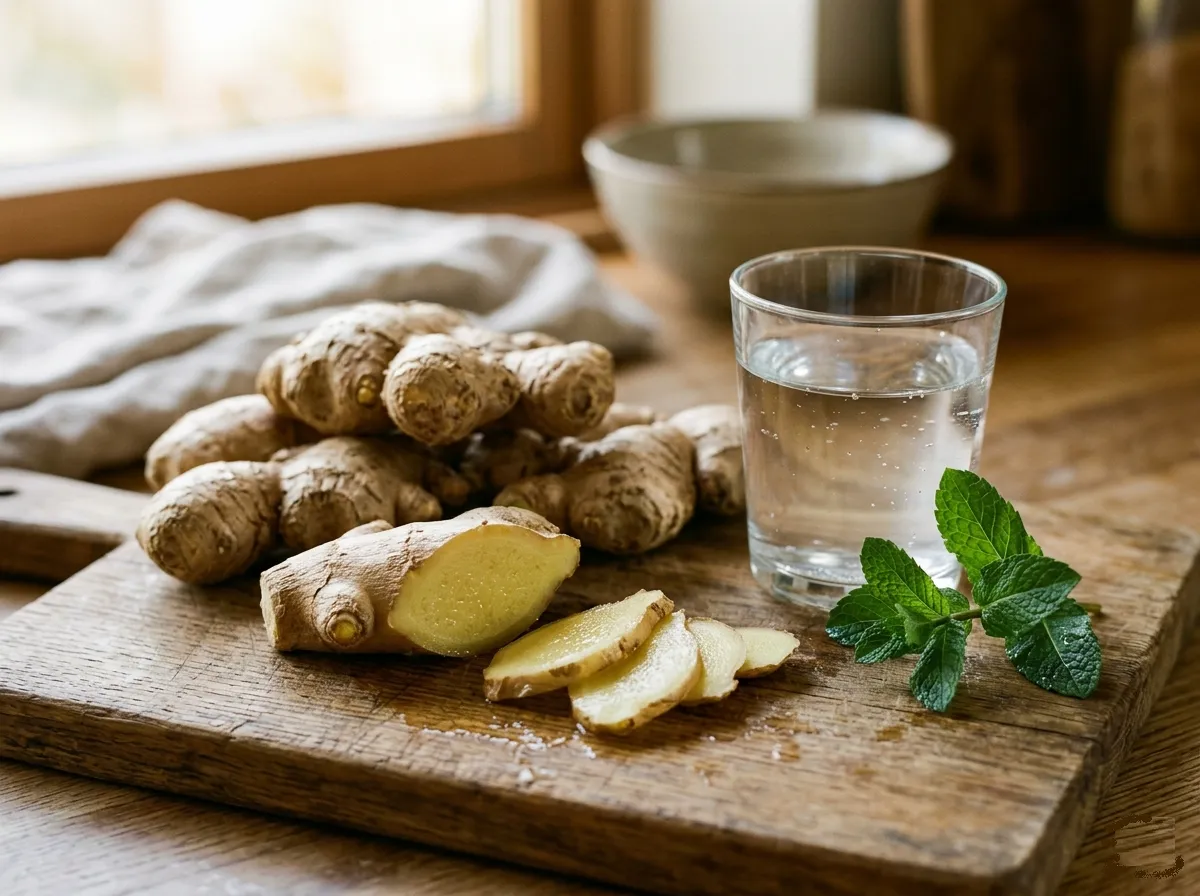
Let’s get to it. Most people know ginger as a cure for upset stomachs or a spicy addition to stir-fries. But dentists are now praising it as a real powerhouse for oral hygiene. The magic lies in a bioactive compound called 6-gingerol.
This isn’t just about flavor. When 6-gingerol touches your tongue, it activates an enzyme in your saliva known as sulfhydryl oxidase. Think of this enzyme as a secret weapon against halitosis. Its job is to break down those smelly sulfur compounds right at their source. Instead of just covering up the odor, ginger triggers a chemical reaction that turns the “rotten egg” smell into something completely odorless. It’s like a natural, instant chemical scrub for your breath.
To use it, dentists recommend a simple “ginger rinse” or chewing a small, thin slice of fresh ginger root after meals. You’ll feel a clean, tingling sensation—far more refreshing than the harsh burn of alcohol-based mouthwashes.
But as effective as ginger is, there’s another natural remedy that’s currently causing a buzz in the dental world. It’s a common household item you probably already use for cleaning or cooking, and its effectiveness is backed by solid clinical data.