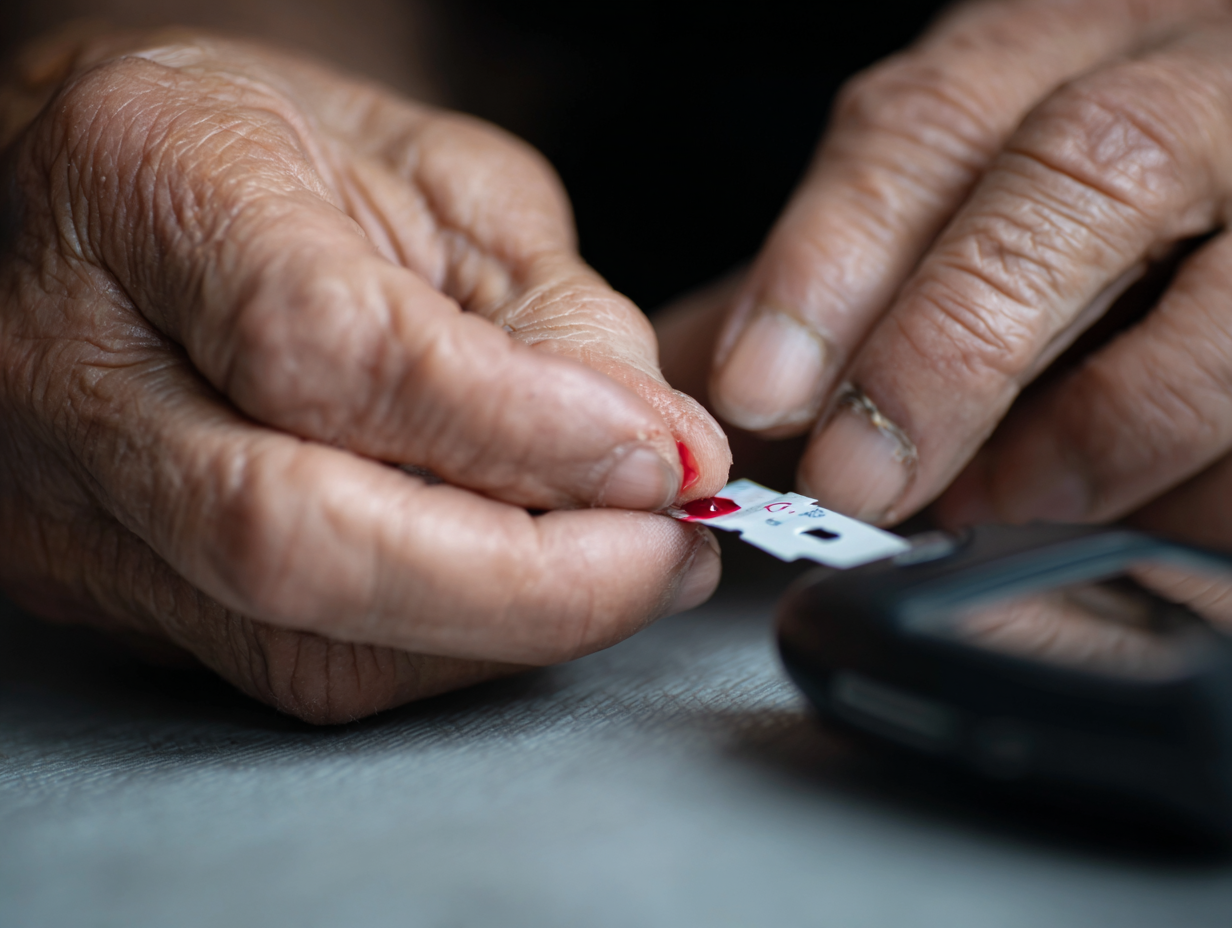
3. Track your numbers and take medications correctly
Your blood sugar readings are not there to judge you. They’re there to reveal patterns, helping you understand how food, movement, stress, sleep, and medication affect your body. Monitoring allows you to see what’s working rather than guessing based on how you feel on a given day.
This habit also includes taking your medications exactly as prescribed and keeping up with regular checkups. Your A1C level shows your average blood sugar over the past two to three months, giving you and your care team a clearer big picture. Diabetes management usually works best when adjustments are made together.
It can also help to keep a simple log of your readings, meals, or symptoms if your doctor recommends it. You may start noticing patterns you would otherwise miss. That kind of information can make conversations with your healthcare team much more focused and useful.
4. Prioritize good sleep
Sleep is often treated as a luxury, but when you have diabetes, it’s essential care. Getting enough rest can improve your mood, energy levels, and blood glucose control. Better sleep also makes the rest of your routine feel more achievable. The American National Institute of Diabetes and Digestive and Kidney Diseases (NIDDK) suggests aiming for about seven to eight hours per night, and the CDC notes that poor sleep habits can make blood sugar harder to manage and leave you feeling more exhausted.
Lack of sleep can also make you feel hungrier, more irritable, and less motivated to stick with other healthy habits. That’s why rest matters so much. Protecting your sleep isn’t lazy—it’s another way of taking good care of yourself.
Small changes can help more than people realize: keep a regular bedtime, make your bedroom dark and cool, and leave phones or TVs outside the room when possible. A calmer night can make the next day’s food choices, energy levels, and glucose management feel less chaotic.
5. Handle stress before it handles you
Stress is a part of life, and it can make diabetes harder to manage—both physically and mentally. The CDC says stress can raise blood sugar, and both the CDC and ADA acknowledge that diabetes burnout is real. That’s why coping skills aren’t extras; they’re part of your care plan.
Keep this habit simple and repeatable. A short walk, a few minutes of deep breathing or meditation, and honest conversations with supportive people can all help. If you constantly feel overwhelmed, down, or shut down, bring it up with your doctor instead of trying to push through alone.
Some people find that stress builds quietly until it starts affecting everything else. That’s why small daily moments to reset can be so helpful. Even ten calm minutes can create a little breathing room and make the day feel less heavy and rushed.